

Losing 50, 80, or even 100+ pounds can be life-changing. But for many people, significant weight loss comes with an unexpected challenge: loose, sagging skin.
Whether you're considering weight loss surgery or have already had a gastric sleeve or gastric bypass, concerns about excess skin are completely understandable.
The good news? There are ways to support your skin, maintain muscle, and improve your overall body composition after surgery. Although no exercise, supplement, or cream can guarantee that loose skin will disappear, a few simple habits can make a difference.
Here are four strategies to discuss with your bariatric care team.
Your skin contains collagen, which provides structure, and elastin, which helps it stretch and return to its original shape. As you age, these fibers naturally change. After significant weight loss, your skin may not shrink enough to match your smaller body.
Three factors play a major role:
Loose skin is a common concern after major weight loss. Research has also found that excess skin can affect quality of life for some bariatric patients.
Learn more: Research on excess skin and quality of life after bariatric surgery.
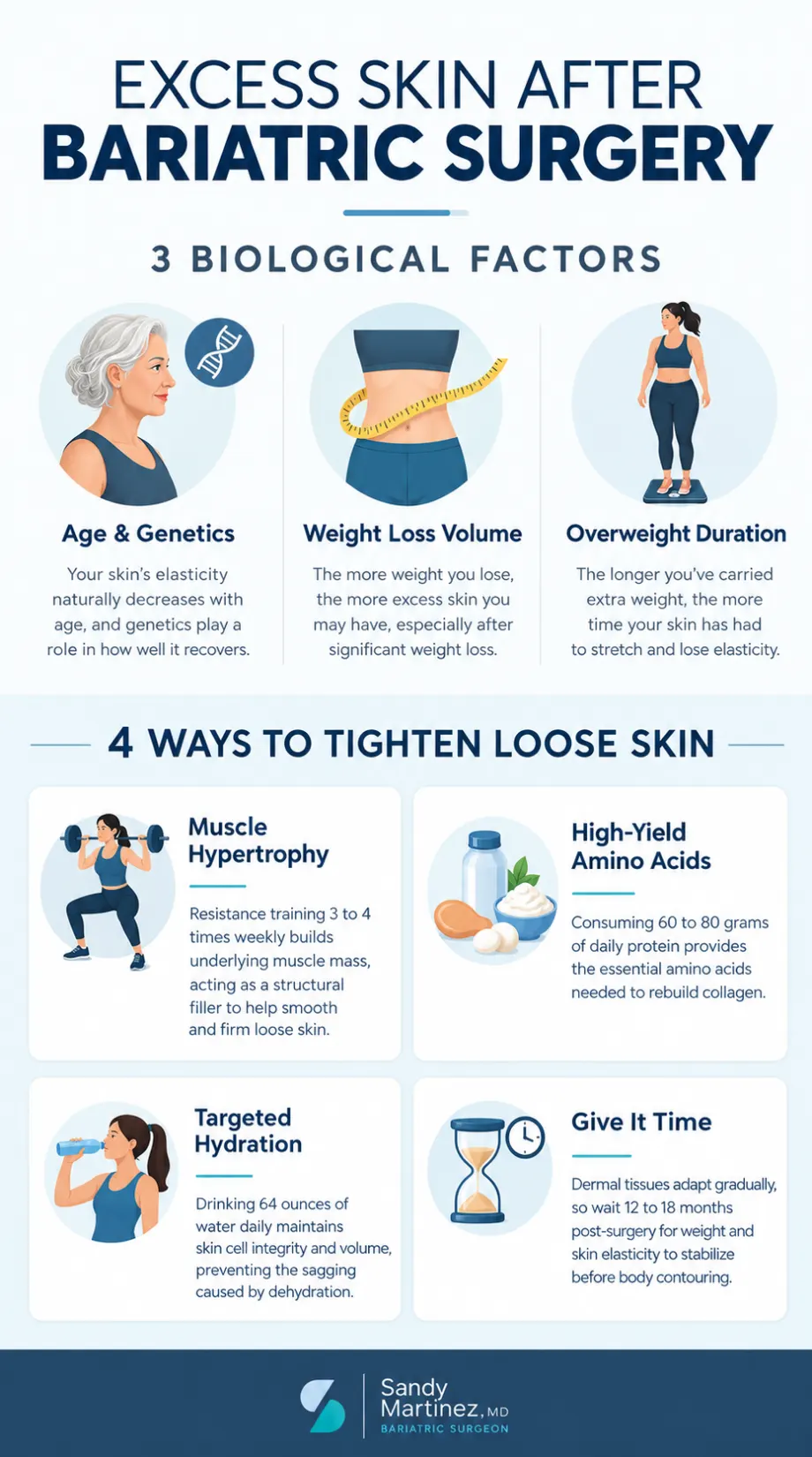
When you lose a significant amount of weight, you lose fat—and potentially some muscle, too. Building and maintaining muscle can improve your body composition and help certain areas look firmer.
Once your surgeon clears you for exercise, consider incorporating resistance training into your routine. Body-weight exercises, resistance bands, and weights can all help build strength over time.
Aim for consistency rather than trying to lift heavy right away. Your exercise plan should match your recovery stage and fitness level.
Keep in mind: Strength training cannot remove excess skin, but it can improve muscle tone and overall body shape.
Protein helps your body maintain muscle and repair tissue. It's particularly important after bariatric surgery, when your food intake and nutrient absorption may change.
Many bariatric programs recommend at least 60 grams of protein daily, although your individual target may be higher.
Good options include eggs, fish, lean meats, Greek yogurt, cottage cheese, and suitable protein supplements.
Don't forget your prescribed bariatric vitamins and minerals. Nutrient deficiencies can affect your overall health and recovery, so attend follow-up appointments and complete recommended bloodwork.
Read more: ASMBS guidance on life after bariatric surgery.
Drinking enough water supports normal skin function and helps prevent dehydration, which can be a concern after bariatric surgery.
A commonly used goal is around 64 ounces of fluid daily, but your needs may vary. Follow your surgical team's recommendations, especially if you have other medical conditions.
Try sipping fluids regularly throughout the day instead of drinking large amounts at once. Keeping a water bottle nearby can make it easier to track your intake.
Hydration supports your health, but drinking extra water won't eliminate significant excess skin.
Your body continues to change throughout weight loss and recovery. Skin may gradually adjust as your weight stabilizes, but the amount of improvement varies from person to person.
You may hear that loose skin tightens within 12–18 months after surgery. While this can be a useful period to reassess your results, there is no guaranteed timeline, and some excess skin will remain.
Focus on consistent nutrition, appropriate exercise, and regular follow-up care. If your weight has stabilized and loose skin continues to bother you, discuss your options with a qualified clinician.
Lifestyle changes can improve muscle tone and support skin health, but they cannot remove substantial excess skin.
For patients with persistent hanging skin, body-contouring procedures may be an option. Depending on the area, these can include a tummy tuck, panniculectomy, arm lift, or thigh lift.
These procedures have risks, involve recovery, and require careful assessment of your health and nutritional status. A qualified plastic surgeon can help determine whether you're a suitable candidate.
Learn more about available options from the American Society of Plastic Surgeons.
No. The amount varies depending on age, genetics, starting weight, total weight loss, and other individual factors.
Exercise cannot remove excess skin, but strength training can build muscle and improve your overall body shape.
Some studies have explored collagen supplements and skin hydration or elasticity, but there is not enough evidence to conclude that they meaningfully tighten substantial excess skin after bariatric surgery.
Timing depends on your weight stability, nutritional status, overall health, and goals. Your bariatric team and a qualified plastic surgeon can help determine the appropriate time.
There is no guaranteed way to prevent it. Good nutrition, appropriate exercise, and following your postoperative care plan can support your health, but they cannot guarantee that your skin will fully retract.
Loose skin can be an unexpected part of major weight loss, but it doesn't mean you've done anything wrong.
Focus on what you can control: build muscle, eat enough protein, stay hydrated, and give your body time to adjust. If excess skin continues to affect your comfort or confidence, you have options worth discussing with your healthcare team.
If you're considering weight loss surgery and want to understand your options, recovery, and long-term care, explore Dr. Sandy Bariatrics or learn more about Dr. Sandy Martinez.
Medical disclaimer: This article is for educational purposes only and does not replace personalized medical advice. Follow your bariatric team's recommendations for nutrition, hydration, exercise, and postoperative care.