




As you may already know, physical activity is an essential element for weight loss. As a bariatric patient, you will hear Dr. Sandy’s multidisciplinary team insist from the preoperative consultation that physical activity and exercise are required for long term bariatric success. But, why, what kind, and when is movement recommended for bariatric patients? In this article we want to go over it with you.
“Some physical activity is better than none”
- World Health Organization
Frequent physical activity has decisively been proven to benefit every major aspect of human health. From cardiovascular (blood pressure and circulation), metabolic (glucose control, insulin sensitivity, weight maintenance), musculoskeletal (strength, bone density, flexibility), immunological (reduces chronic inflammation), mental (reduces anxiety, stress and depression), and essentially all other systemic body functions, physical activity directly decreases chronic pathologies and directly increases all-round longevity.
Nowadays, efforts are constantly made in the hopes of fighting physical activity’s number one enemy: Physical inactivity. Regarding physical inactivity’s consequences, one can easily estimate these by removing and even worsening the benefits experienced through movement that were just mentioned above.
But what exactly is physical activity, what kinds exist, and is it the same as exercise?
When we tell patients to practice physical activity or exercise, they usually have a fixed idea of what that entails. Generally, there’s confusion as to what kinds of physical activities count, or how much time or intensity should be done. Let’s start with some definitions, followed by general population guidelines.
Simply put, physical activity is defined as any bodily movement produced by skeletal muscles that requires energy expenditure. To understand this domain more, we can further classify it as aerobic or anaerobic physical activity, which are defined as a continuous, rhythmic activity that involves large muscle groups and relies on a sustained supply of oxygen to perform (jogging, cycling, swimming), and as a high-intensity, short-duration activity that doesn’t necessarily require long periods of oxygen supply to perform (weight-lifting, strength-yoga). On top of this, we can finally classify our movements as Light-Intensity Physical Activity (LPA),Moderate-Intensity Physical Activity (MPA), and Vigorous-Intensity PhysicalActivity (VPA), all of which have at least some beneficial impactson metabolic health and weight control.
Although generally of little to no impact on metabolic health or weight control, but does have a beneficial impact on overall health, physical activity can be further classified into household, leisure, occupational and transport physical activity, referring each to chores or work done at home, for that of entertainment (dancing, gardening), done out of necessity due to work (walking, accommodating), or when translating from one site to another—respectively.
Exercise is a subcategory of the all-encompassing term physical activity, and is characterized by being a planned, structured, repetitive and purposeful maintenance or improvement of physical fitness and performance. In this sense, it includes all sports, and all forms of structured training such as functional exercises, training at home, and others. Although physical activity is enough to maintain health, and is what our multidisciplinary team will insist upon, when adequate, exercise is known to further benefit one’s health.
Physical inactivity is defined as an insufficient physical activity level that does not meet present recommendations and guidelines (discussed below). It is frequently known as sedentarism, and is any behavior performed while awake, that consists of low energy expenditure, such as sitting, reclining or lying. Desk-office jobs, driving, watching television or reading are examples of sedentary behavior—these are not necessary inadequate behaviors, they simply do not impact metabolic or muscle health.
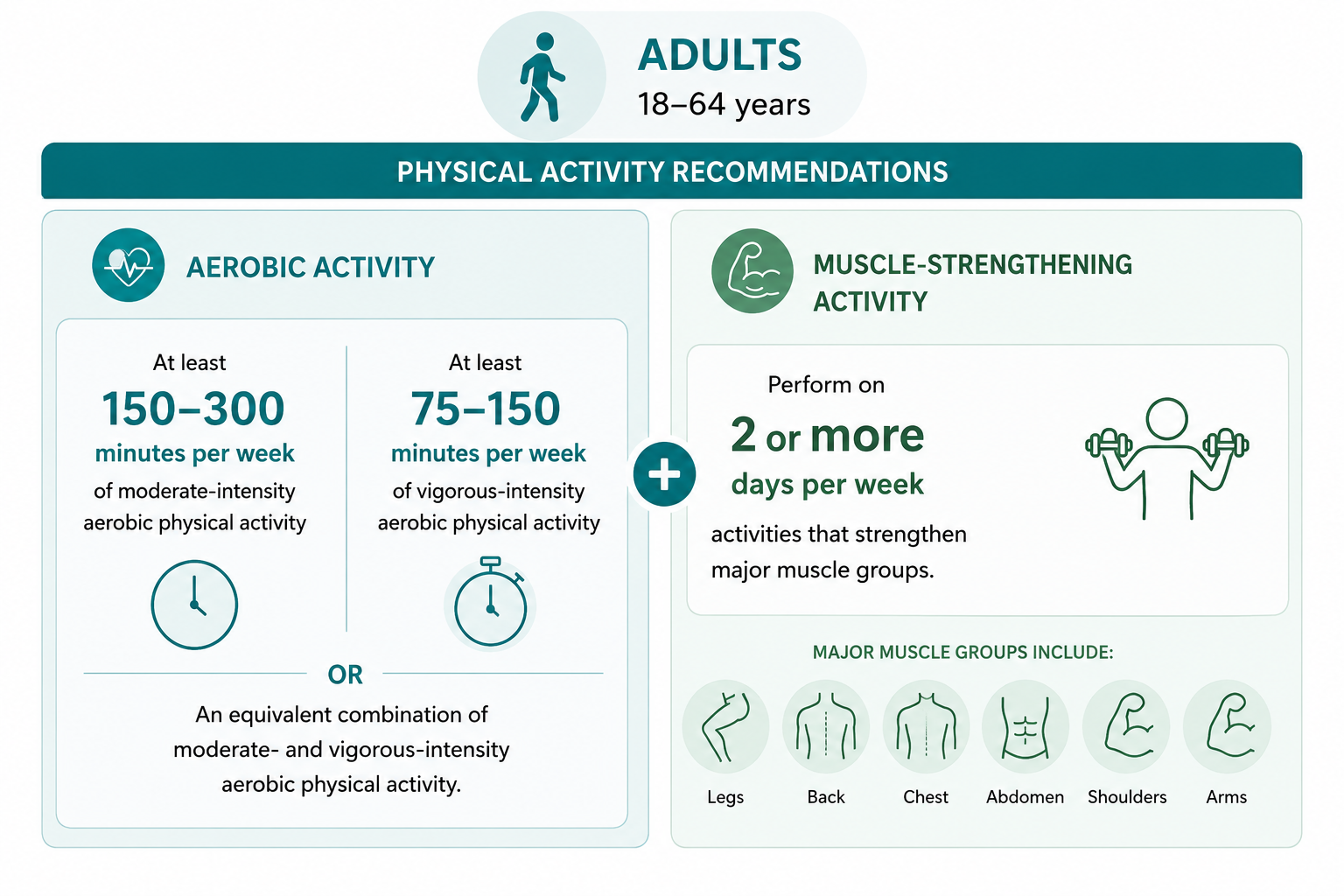
For adults aged 18 to 64, the World Health Organization (WHO) starts by stating that physical activity confers benefits for all-round health, and that, importantly stated so, “Some physical activity is better than none” (2020). This sets an open, friendly, and highly personalized view for the integration of physical activity to our lives: Excluding any undesired, harsh, obligatory or intensive physical activity will always be a priority of Dr. Sandy’s multidisciplinary team.
The WHO general guidelines for adults state the following:
1) Perform 150 to 300 min of Moderate-Intensity Physical Activity (MPA) per week, or,
2) Perform 75 to 150 min of Vigorous-Intensity Physical Activity (VPA) per week, and,
3) Perform 2 or more days of Muscle-Strengthening Activity for additional benefits.
Now that we know why, and what kind of physical activity is beneficial for overall health, we can discuss important information all bariatric patients should consider before and after their surgery.
Research has tried to define when the optimal times are, and what kinds are the best forms of physical activities for bariatric patients.There is no single decisive answer to this: As with any form of clinical prescription, it depends on an array of factors such as date of surgery, form of surgery (laparoscopic or endoscopic), weight and fitness goals, as well as body composition and capabilities. However, there are general recommendations one can consider to figure out what is best for you.
During the last month and half before your surgery date, we would want to introduce and adapt you to a functional baseline for future physical activity endeavors, it will obey the following guidelines:
1) Clinical Goals: Improve cardiorespiratory fitness, reduce liver and overall visceral fat, and build a friendly physical activity habit that you feel comfortable with—all of which will decrease surgical risks.
2) Aerobic Target: 150 min per week of Moderate-Intensity Physical Activity (MPA) such as brisk walking, stationary cycling or water aerobics.
3) Resistance Target: Two days per week you may add low-impact strength training that will help you preserve muscle mass after surgery and likewise will create a functional baseline for future training.
At this point our main goal is to take care of external and internal wounds from surgery, allow them to heal without any stress whilst activating our bodies and avoiding sedentarism.
1) Clinical Goals: Promote blood circulation, prevent deep vein thrombosis and activate musculoskeletal tissues without compromising healing.
2) Ambulation Protocol: Our hospital staff will encourage you to begin gentle walking within the first 4 to 6 hours post-surgery. Aim for 5 to 15 min of low-intensity walking every 2 to 3 hours.
3) StrictIntra-Abdominal Precautions: Avoid lifting anything heavier than 10-15 lbs (4.5-6.8 kg) and abstain from core-engaging exercises (e.g., crunches, heavy pushing/pulling) for 4 to 6 weeks post-op to prevent incisional or internal herniation and staple-line stress.
At this point, we can assure that it is safe to initiate exercise.The goals here revolve around maintenance. However, we encourage you to continue exploring physical activities so that you increase the health benefits you will already be experiencing.
1) Clinical Goals: Preserve lean body mass, maintain resting metabolic rate, and support long-term weight-loss maintenance through physical activity’s caloric deficit.
2) Aerobic Progression: Gradually advance to 150-300 min per week of Moderate-to-VigorousPhysical Activity, which include running, swimming, rowing, etc.
3) Resistance Progression: Integrate 2 to 3 sessions per week of structured progressive resistance training (e.g., bodyweight squats, chest presses, resistance bands) to minimize muscle loss.
Physical activity is your most powerful tool for protecting your health, boost your recovery, and keep the weight off long-term. Always remember: “Some Physical Activity is better than none” (WHO, 2020).
Whether you are preparing for surgery or navigating life post-op, you don’t have to figure out the right timing, intensity, or routines on your own. Reach out to Dr. Sandy’s multidisciplinary team today so we can help you design your own personalized, safe and sustainable movement plan tailored specifically to your preferences and surgical timeline.
Bariatric Nutrition | Behavioral Neuropsychology
Specialistin Bariatric Nutrition, Metabolic Syndrome, and Eating Disorders