




If you recently underwent weight loss surgery, you were likely prepared for the dietary phases, the portion controls, and tracking your protein goals. However, few people are fully prepared for the ultimate sensory plot twist: waking up to find that your favorite foods suddenly taste completely different.
If your go-to pre-op protein shake now tastes overwhelmingly sugary, or you are suddenly harboring a passionate obsession with pickles, you aren’t losing your mind. Clinical studies show that a staggering 36% to 72% of bariatric patients report a significant shift in taste perception following surgery.
This isn't a psychological trick—it is a deeply biological transformation. Instead of common listicle fluff, let’s dive into the 6 scientifically proven reasons why your taste buds change after bariatric surgery.
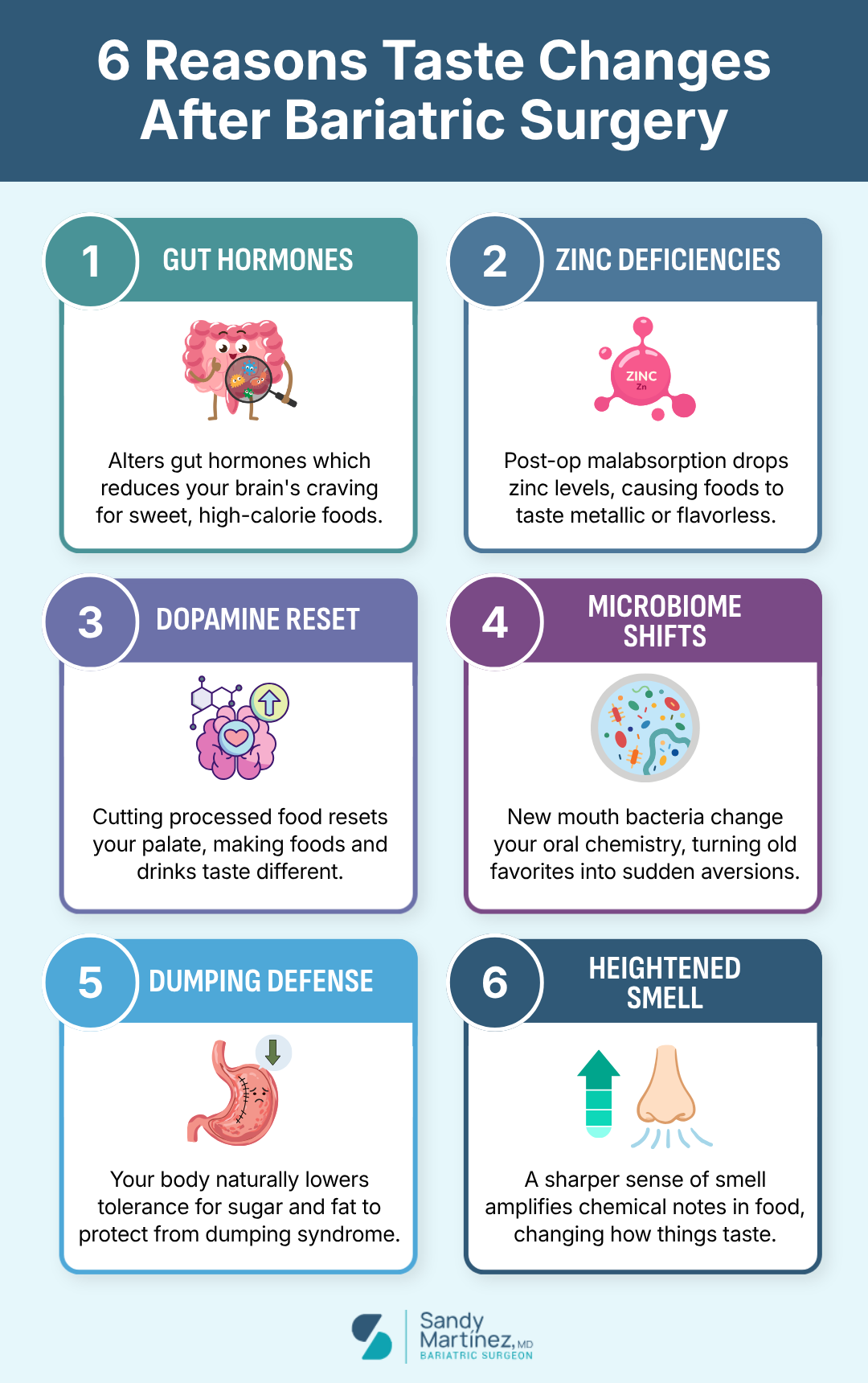
Procedures like Gastric Sleeve (VSG) and Gastric Bypass (RYGB) do not just shrink the size of your stomach; they completely rewire your endocrine system. Surgery alters the secretion of critical gut hormones, including GLP-1, peptide YY (PYY), and ghrelin (the hunger hormone).
These hormones communicate directly with the brain's reward centers. Clinical reviews have noted that hormones like GLP-1 directly modulate your tongue's sensitivity to flavors. When these hormones shift, your brain literally changes how it registers pleasure from food, frequently causing you to find high-calorie or sweet options far less appealing.
One of the most significant causes of distorted taste is a lack of micronutrients. Surgeries like gastric bypass and duodenal switch (SADI-S / DS) alter your digestive tract and restricts food intake, malabsorption is a common side effect.
Specifically, zinc deficiency peaks right around the 6-month post-op mark, coinciding perfectly with when most patients report major taste distortions. Zinc is an essential building block for gustin, a protein required for the production and maintenance of your taste buds. When zinc levels drop, it can cause dysgeusia—a condition that makes foods taste metallic, bitter, or completely flavorless.
Before weight loss surgery, a chronic diet high in ultra-processed, sugary, or high-fat foods can actually desensitize the brain's dopamine receptors. Over time, you require more intense flavors just to feel satisfied.
Post-op life forces a strict break from these heavy fats and sugars. This acts as a hard reset for your brain's reward processing center. Because your palate is no longer "blunted" by constant exposure to hyper-palatable foods, everyday whole foods suddenly taste incredibly vibrant, while artificial sweeteners or processed items taste aggressively overwhelming.
Bariatric surgery causes an immediate and dramatic shift in the ecosystem of bacteria living inside your digestive tract and mouth. Changes in stomach pH, bile acid metabolism, and your new post-op diet rapidly alter which bacterial strains thrive.
Because the microbes in your mouth produce unique metabolic byproducts right next to your tongue's taste receptors, a shift in your oral microbiome alters the literal baseline chemistry of your mouth. This shift directly influences your sensory perception, creating new food preferences and turning old favorites into aversions.
Your body is incredibly smart and adaptive. Following a gastric bypass or sleeve, dumping carbohydrates or highly concentrated sugars into the small intestine can trigger dumping syndrome—causing intense nausea, sweating, and rapid heart rate.
To protect you from this, your body undergoes a defensive hedonic shift. It intentionally reduces your preference for concentrated sugars and fats, making them taste sickeningly sweet or unpleasantly greasy. Your altered taste buds act as a biological warning system to keep you safe from foods that could make you physically ill.
True flavor is actually a team effort between taste (on your tongue) and smell (in your nasal passages). Post-bariatric patients frequently experience a massive spike in olfactory—or smell—sensitivity.
When you chew food, aromas travel up the back of your throat to your nasal cavities (known as retronasal smelling). Because surgery heightens your sense of smell, subtle chemical notes, preservatives, or artificial ingredients that you never noticed before are suddenly amplified, completely changing how the food tastes to you.
While the six points above explain the biological why, it helps to know how these changes present themselves in everyday life. Two of the most universal complaints in the bariatric community include:
The "Heavy" Water Phenomenon: Many post-ops complain that plain water suddenly tastes thick, metallic, or "heavy". This is typically a combination of temporary oral inflammation, minor dehydration, and rapid fat-burning (ketosis).
The Protein Shake Aversion: Shakes that tasted fine pre-op can suddenly taste chemical or sickeningly sweet due to your heightened sensitivity to artificial sweeteners.
If you are currently struggling to find foods that taste good, remember that this sensory shift is a sign of a successful metabolic reset. Your body is adapting, and your tongue is just trying to keep up.
Pivot to Savory: If sweet protein shakes make you gag, switch to unflavored protein powders mixed into warm, savory bone broths.
Fix Your Water: If plain water tastes heavy, try playing with temperatures (ice-cold vs. warm herbal teas) or adding a fresh squeeze of lemon, lime, or cucumber.
Lean into Healthy Cravings: Enjoy your new affinity for tangy, sharp flavors by experimenting with mustard, vinegar, and fresh herbs to spice up your soft proteins.
Your post-op palate is a blank canvas. Let's swap stories in the comments below: What is the weirdest food change you've experienced since surgery? What did you used to love that you now hate—or vice versa?