


Gastric sleeve surgery has become one of the most common weight loss procedures for a reason. It can help people lose a significant amount of weight, improve health conditions tied to obesity, and make everyday life feel more manageable. Still, it is not the right choice for everyone, which is why it is important to understand both the benefits and the trade-offs before moving forward.
Gastric sleeve surgery, also called sleeve gastrectomy, removes a large portion of the stomach and leaves behind a smaller, sleeve-shaped pouch. Because the stomach is smaller, patients usually feel full sooner and eat less at each meal. The procedure may also reduce hunger signals, which can make it easier to stick with healthier eating habits after surgery.
For many patients, the biggest appeal of gastric sleeve surgery is that it can deliver real, lasting results. In reputable clinical studies, patients often lose about 60–70% of their excess weight within the first year, and some reports place total excess weight loss in the 50–70% range depending on the individual and follow-up care.
Gastric sleeve may also help improve obesity-related conditions. Some patients see better control of type 2 diabetes, blood pressure, sleep apnea, and joint pain as the weight comes off. That kind of improvement can make a meaningful difference in energy, mobility, and daily quality of life.
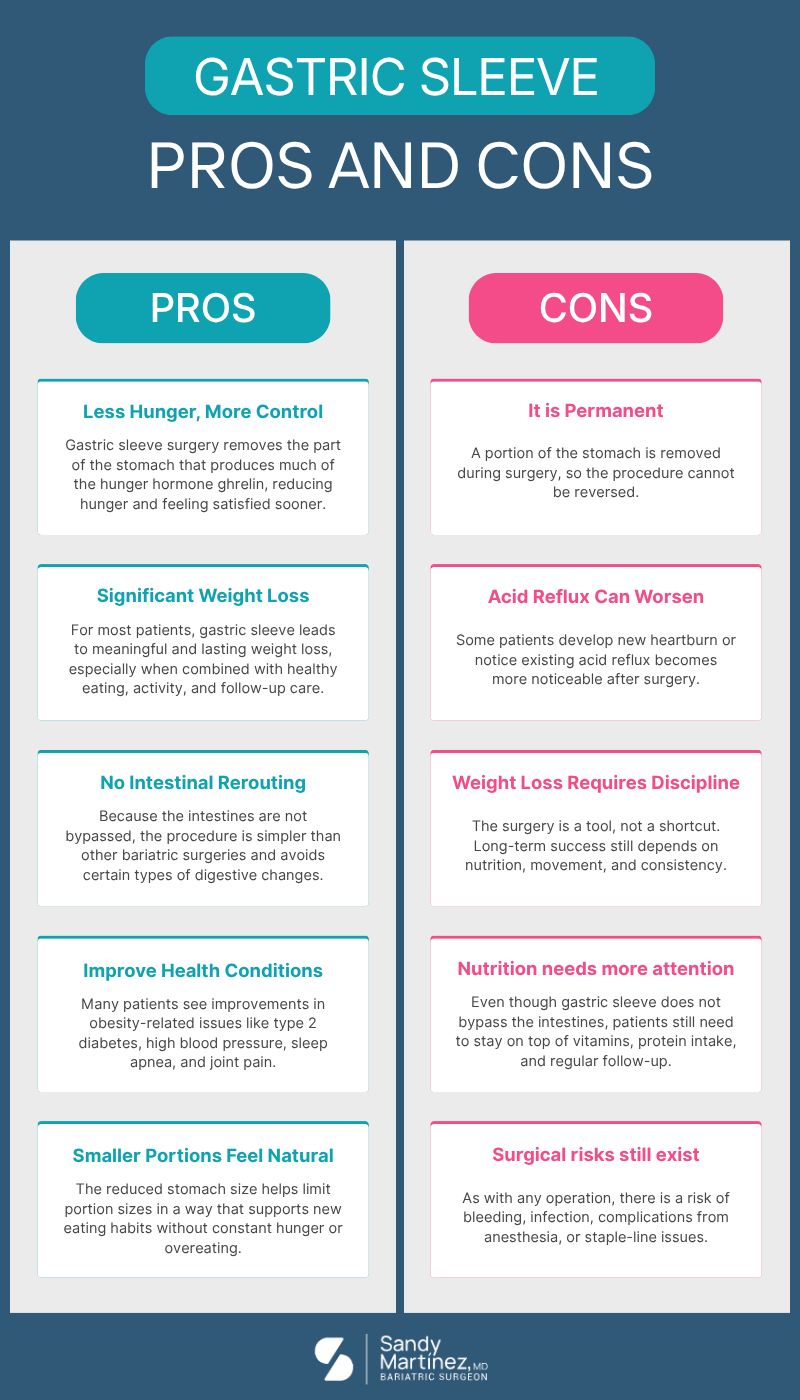
Less hunger, more control: Gastric sleeve surgery removes the part of the stomach that produces much of the hunger hormone ghrelin, which can help many patients feel satisfied sooner and stay on track more easily.
Strong weight loss potential: For the right patient, gastric sleeve can lead to meaningful and lasting weight loss, especially when combined with healthy eating, activity, and follow-up care.
No intestinal rerouting: Because the intestines are not bypassed, the procedure is simpler than some other bariatric surgeries and avoids certain types of digestive changes.
Can improve health conditions: Many patients see improvements in obesity-related issues like type 2 diabetes, high blood pressure, sleep apnea, and joint pain as they lose weight.
Smaller portions feel natural: The reduced stomach size helps limit portion sizes in a way that supports new eating habits without constant hunger or overeating.
It is permanent: A portion of the stomach is removed during surgery, so the procedure cannot be reversed.
Reflux can worsen: Some patients develop new heartburn or notice existing acid reflux becomes more noticeable after surgery.
Weight loss still requires discipline: The surgery is a tool, not a shortcut. Long-term success still depends on nutrition, movement, and consistency.
Nutrition needs more attention: Even though gastric sleeve does not bypass the intestines, patients still need to stay on top of vitamins, protein intake, and regular follow-up.
Surgical risks still exist: As with any operation, there is a risk of bleeding, infection, complications from anesthesia, or staple-line issues.
Gastric sleeve tends to work best for people who are ready to make long-term changes. Surgery can help, but it cannot do the entire job alone. Patients who do best are usually the ones who are willing to follow the eating plan, attend follow-up visits, and stay committed after the excitement of surgery wears off.
Good candidates typically:
Compared with gastric bypass, the sleeve is usually a simpler procedure. It does not involve reconnecting the intestines, which can mean fewer nutritional complications. On the other hand, bypass may be a better choice for some patients, especially those with severe reflux or specific metabolic concerns.
Compared with non-surgical weight loss, gastric sleeve surgery usually produces much more dramatic and lasting results. But it is not a shortcut. The surgery creates the opportunity for change, and the patient has to keep it going.
Most patients lose weight steadily over the first year after surgery, especially when they follow their nutrition plan and stay active. Many also notice everyday benefits like easier movement, better energy, and less strain on the body.
That said, results are not identical for everyone. Long-term success depends on habits, support, follow-up care, and whether the patient is able to stay consistent after surgery.
Gastric sleeve surgery is a powerful tool, but it is not a perfect one. For the right patient, it can be life-changing. For someone who is not ready to commit to long-term change, it may be frustrating and disappointing.
That is why the decision should be based on more than just weight loss numbers. It should also take into account reflux, lifestyle, expectations, and the kind of support available after surgery.
To find out if gastric sleeve is right for you, begin by completing our health questionnaire.